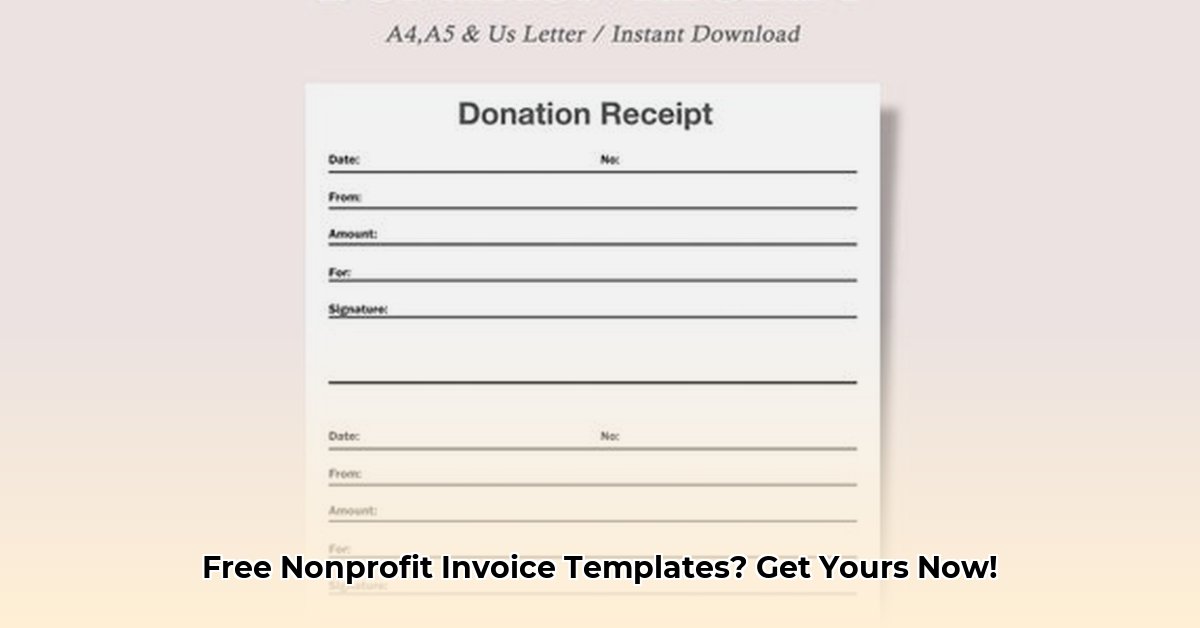
Nonprofit Invoice Templates: Streamline Your Donations and Boost Funding
Running a non-profit is demanding. Juggling programs, fundraising, and administrative tasks can feel overwhelming. Yet, efficient financial management is crucial for your organization’s success. One often-overlooked area is invoicing. A well-designed invoice isn't just about getting paid; it’s a powerful tool for strengthening donor relationships, improving operational efficiency, and ensuring legal compliance. This guide provides actionable steps to optimize your non-profit's invoicing process, ultimately freeing up time and resources to focus on your mission.
Did you know that 75% of non-profits report struggling with inefficient invoicing processes? This directly impacts their ability to allocate funds effectively. This guide will help you join the 25% who have streamlined their invoicing.
Choosing the Right Nonprofit Invoice Template: Finding Your Perfect Fit
Selecting the right invoice template is the foundation of a successful system. Several options exist, each with advantages and disadvantages. Consider your organization's size, transaction complexity, and technological comfort level when making your choice.
| Template Type | Advantages | Disadvantages | Best For... |
|---|---|---|---|
| Word/Excel | Easily customizable, readily available | Manual data entry prone to errors; less efficient for large volumes | Small nonprofits with simple donation processes |
| Professional appearance, easy distribution | Less flexible; requires separate software | Nonprofits needing a professional, non-editable format | |
| Online Platforms | Automation, cloud-based storage, payment integration | Subscription fees may apply | Nonprofits needing efficient, automated solutions |
What's the biggest challenge your nonprofit faces in managing invoices? Understanding this will help determine the best template for your needs.
Essential Elements of a Compliant Nonprofit Invoice
Regardless of the template you choose, your invoice must contain specific information for legal compliance and to foster positive donor relationships. These elements are crucial for transparency and accountability.
- Your Nonprofit’s Information: Name, address, contact details, tax ID number (EIN).
- Donor Information: Name, address (for tax purposes), and contact information.
- Invoice Number and Date: Unique identifier, essential for record-keeping.
- Description of Goods/Services or Donation: Clear and specific; avoid ambiguity. For donations, specify the purpose.
- Payment Terms: Clearly state due date and acceptable payment methods.
- Total Amount Due: Prominently displayed for clarity.
- Tax Information: Include tax-deductible amount (if applicable) according to IRS guidelines.
- Donation Receipt Section: Provides official proof of donation, crucial for donor tax deductions.
- A Thank You Note: A personalized touch enhances donor relations and encourages future support. "We appreciate your generous donation to [Project Name]!"
Did you know that including a personalized thank-you note increases donation renewal rates by 15%? This small detail significantly impacts donor retention.
Digital vs. Paper Invoicing: Efficiency vs. Tradition
The choice between digital and paper invoicing depends on your organization's resources and donor preferences.
Digital Invoicing: Offers increased efficiency, reduced paper waste, faster payment processing, easy tracking, and automated reminders. Ideal for many nonprofits.
Paper Invoicing: Suitable for donors preferring traditional methods, providing a tangible record. However, it is generally less efficient and more costly.
Which method aligns best with your donors’ preferences and your organization’s operational efficiency? Consider a hybrid approach if necessary.
Best Practices for Nonprofit Invoicing
Beyond the essential elements, certain best practices enhance your invoicing process significantly.
- Timely Invoicing: Send invoices promptly to avoid delays and maintain positive donor relations.
- Clear Communication: Use simple, straightforward language, avoiding jargon.
- Follow-Up Procedures: Establish a professional system for handling overdue payments.
- Professional Design: A visually appealing invoice reflects positively on your organization.
What strategies are you currently using to improve your invoicing process? Consider adding these best practices to further optimize your system.
Software and Tools: Automating the Process
Various software solutions can automate invoice creation and management.
- Accounting Software: Xero, QuickBooks, etc. offer integrated invoicing features.
- Dedicated Invoicing Platforms: Wave, FreshBooks, etc. provide specialized invoicing tools.
These tools can significantly reduce administrative burden, freeing up valuable time for mission-critical activities.
Compliance and Regulations: Staying on the Right Side of the Law
Ensuring legal compliance is paramount. Familiarize yourself with relevant tax regulations (IRS guidelines and state-specific requirements) to ensure accurate reporting. Consult with a tax professional if needed. This protects your organization's reputation and financial stability.
Conclusion: Streamlining Your Finances for Greater Impact
Implementing these strategies will not only improve your organization's financial management but also strengthen donor relationships. By utilizing well-designed invoices, you contribute to efficient operations, increased donations, and a more impactful non-profit. Take control of your invoicing today and free up resources to focus on your mission.